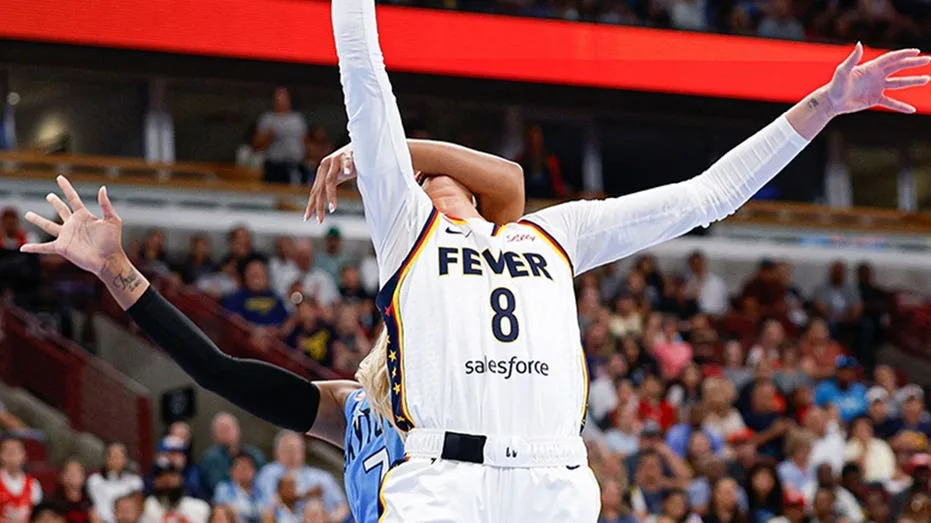
A recent WNBA matchup saw DiJonai Carrington ejected from the game after receiving a Flagrant 2 foul for dangerous contact with Sophie Cunningham. The incident quickly escalated beyond the court when Carrington subsequently made a controversial post on social media.
The foul occurred as Cunningham was attempting a transition layup, with Carrington making contact with her above the neck. Following the officials' decision to issue a Flagrant 2 and remove her from the contest, Carrington promptly posted “WHITE PRIVILEGE @indianafever” on Threads.
This post immediately shifted the narrative, transforming a disciplinary action for her on-court conduct into an allegation rooted in racial dynamics. Rather than facing direct accountability for the play, Carrington's response appeared to invite a different kind of discussion. In the aftermath, some commentators within the WNBA media landscape appeared to rally in support of Carrington, seemingly minimizing the severity of the contact.
Examining the Media Response
ESPN analyst Andraya Carter was among those who offered a defense, characterizing the play as an outcome of Carrington’s characteristic aggressive approach to the game.
“These are plays we’ve seen from DiJonai, right? So getting in the right position, jumping over the top, getting these transition blocks,” Carter explained. “She’s always gonna make that effort. So even for some of these, she’s behind the offensive player coming over the top. So again, she was behind Sophie Cunningham. She wasn’t able to get over the top. Had she got over the top and made that play, we wouldn’t have been talking about it. She was too far behind the play. The contact above the head was too much. But that’s what DiJonai Carrington does. Like, this wasn’t, to me, because it was Sophie Cunningham making the layup.”
However, this analysis appeared to contain internal inconsistencies. Carter acknowledged that Carrington was indeed behind the play and that the contact to Cunningham’s head was “too much.” Yet, she ultimately excused the action by stating, “that’s what DiJonai Carrington does,” suggesting that aggressive tendencies mitigate the severity of the foul.
Broader Context and Perceived Disparities
The incident and its subsequent commentary have led some to suggest that Sophie Cunningham may face undue scrutiny within the league, possibly due to her outspoken views regarding the participation of male athletes in women’s sports. This stance, it is argued, may foster an atmosphere where she is perceived as a target, potentially leading players like Carrington to anticipate that aggressive actions directed toward her will be rationalized after the fact.
The response to Saturday’s events has also brought to light a perceived ongoing disparity in how incidents are covered within the WNBA. Critics argue that when physical aggression is directed at White players, such as Cunningham or Caitlin Clark, commentators have frequently sought explanations that soften the actions of the offending player.
The perceived imbalance becomes particularly stark when considering a reverse scenario: a White player committing a similar high-contact foul on a Black opponent, being ejected, and then immediately posting a racial accusation aimed at the opposing team.
Past Incidents and Call for Consistency
This is not the first time Carrington has been involved in a controversial on-court incident. During the 2024 postseason, Carrington previously made contact with Caitlin Clark’s eye, leading to a noticeable injury for the league’s prominent player. Carrington subsequently appeared to mock the public outcry that followed online.
Less than two years later, another dangerous play involving Carrington has produced renewed controversy, once again followed by efforts to redirect the conversation away from her own responsibility.
The facts of the recent incident are clear: Carrington delivered a dangerous hit that officials deemed serious enough to warrant a Flagrant 2 foul and ejection. She then responded by invoking race. Rather than critically examining both actions, prominent voices within the WNBA media appeared to focus their energy on explaining her conduct.
Ultimately, player safety should not depend on the identity of the player delivering the hit, just as media scrutiny should not be influenced by the racial identities of the players involved.