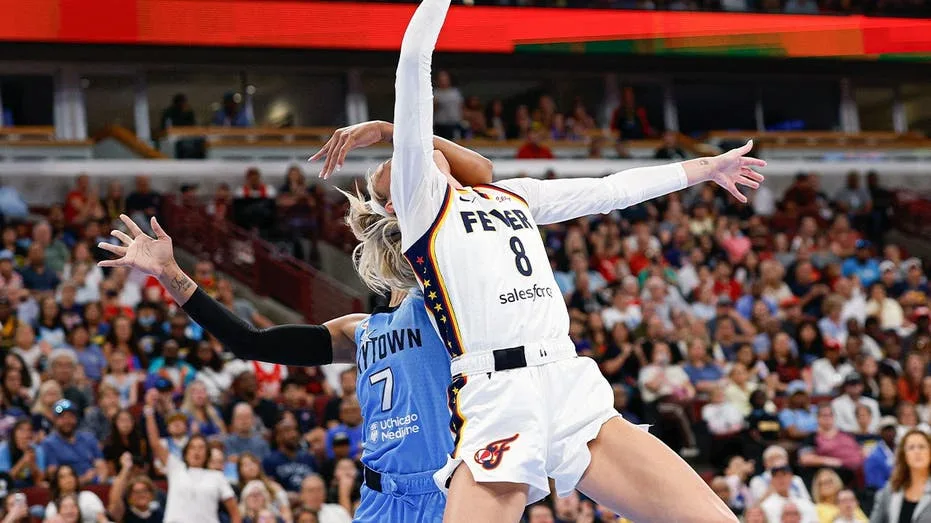
A recent on-court incident involving WNBA player DiJonai Carrington and Sophie Cunningham has drawn considerable attention, particularly after Carrington's social media post following her ejection. The event has led to widespread discussion within sports media regarding perceived racial biases in the league's coverage.
For many observers, the situation appeared straightforward: Carrington committed a flagrant foul that struck Cunningham in the mouth, drawing blood. Officials deemed the play worthy of a Flagrant 2 foul and ejected Carrington. In response, Carrington posted "White privilege" from the locker room, an accusation she directed at the league's officiating.
Media Figures Weigh In on the Incident
Following the altercation, several prominent sports commentators defended Carrington. Some suggested that Cunningham had committed a similar foul in the past and received different treatment, implying a racial double standard.
Commentator Jemele Hill posted, "DiJonai Carrington receiving a Flagrant 2 and an ejection was the right call, but let’s go back to the play that made Sophie Cunningham famous. SC gained a million followers overnight. She is affectionately known as an enforcer. Nobody suggested she should be brought up on assault charges despite her play being clear retaliation." Hill further contrasted this with Carrington's situation, stating, "Meanwhile DiJonai Carrington was actually going for the ball but she’s being called racial slurs, a thug, and some suggested a suspension for multiple games."
Cari Champion echoed similar sentiments, sharing footage of Cunningham's past foul and questioning if Carrington would receive the same positive recognition. Champion also reportedly posted, in a message that was later deleted, that the "League has a race problem."
Comparing Past Incidents and Player Responses
However, critics argued that the comparison between Carrington's recent foul and Cunningham's past actions was not entirely accurate. They pointed out that Cunningham, in her previous incident, acknowledged deserving her ejection, whereas Carrington disputed the call and invoked racial motivations.
The past incident referenced by Hill and Champion occurred in June of last year. During a game, Connecticut's Marina Mabrey shoved Caitlin Clark, and Jacy Sheldon then slapped Clark. Cunningham intervened by shoving Sheldon onto the court. This moment was widely noted as Cunningham being among the first players to physically defend Clark, a high-profile player who has frequently been subjected to hard fouls.
In that instance, Cunningham was seen as retaliating for a foul against her teammate. Carrington, in contrast, committed a flagrant foul in what some characterize as a pattern of aggressive play throughout her career, including an incident two seasons prior where she reportedly made contact with Clark's eye.
After the recent game, Cunningham addressed reporters' questions about the comparisons to Carrington's foul. She stated, "I think the league is taking care of that. This has nothing to do with race. Last year, I did the same thing and I got kicked out. And I deserved to be kicked out. There's no reason even to play that card." She concluded that the two situations were not the same.
Broader Media Commentary and Omissions
Beyond Hill and Champion, other sports media personalities weighed in. On a Sunday broadcast, NBC host Maria Taylor discussed the play, suggesting that criticism of Carrington was being used as "ammunition for a culture war." Critics noted that Taylor and NBC did not mention Carrington's "White privilege" social media post during the segment, despite its direct relevance to the "culture war" narrative.
Similarly, ESPN's WNBA halftime show, featuring Monica McNutt, Andraya Carter, Chiney Ogwumike, and Malika Andrews, reportedly downplayed Carrington's foul as "accidental" while also omitting any mention of her social media post. This selective reporting, some argued, allows media outlets to dismiss criticism of Black players involved in hard fouls against white players as racially motivated harassment, portraying the fouls as merely "part of the game."
Social media commentary also included former ESPN anchor Cindy Brunson, who contended that Carrington did not deserve a Flagrant 2, that Cunningham should have been ejected, and that white players in the WNBA are benefiting from "reverse DEI." Brunson maintained that Cunningham, despite her visible injury, was the aggressor who should have been removed from the game.
Adding to the discourse, Cunningham's former teammate, Sydney Colson, posted on her social media account with the caption, "I love a trans foul," seemingly mocking Cunningham in the context of the incident.
Concerns Over League Dynamics and Future Implications
The cumulative effect of these media responses, some argue, points to a broader issue where certain segments of the sports media are unwilling to criticize Black women in the WNBA, particularly when pitted against white women. This perspective suggests that identity—specifically race and sexuality—can supersede factual context in how incidents are interpreted and reported.
Commentators have expressed concern that these dynamics make it challenging to support the WNBA, suggesting a prevailing sentiment among some athletes that holds demeaning views toward white women unless they conform to certain expectations. There is a fear that this environment, where aggressive actions may be excused or downplayed by the media, could foreseeably lead to serious injuries for players like Cunningham or Clark in the future. Critics suggest that if such injuries occur, the same media figures would likely dismiss them as "part of basketball" while labeling those appalled by the incident as racist.