Donald Trump has once again urged federal lawmakers to approve the Protect College Sports Act, stating that its passage is imperative as a congressional recess approaches.
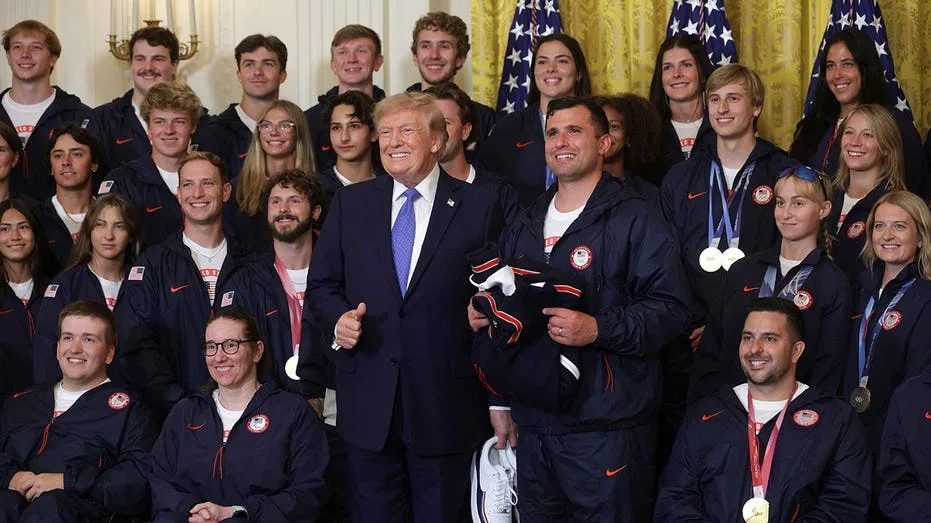
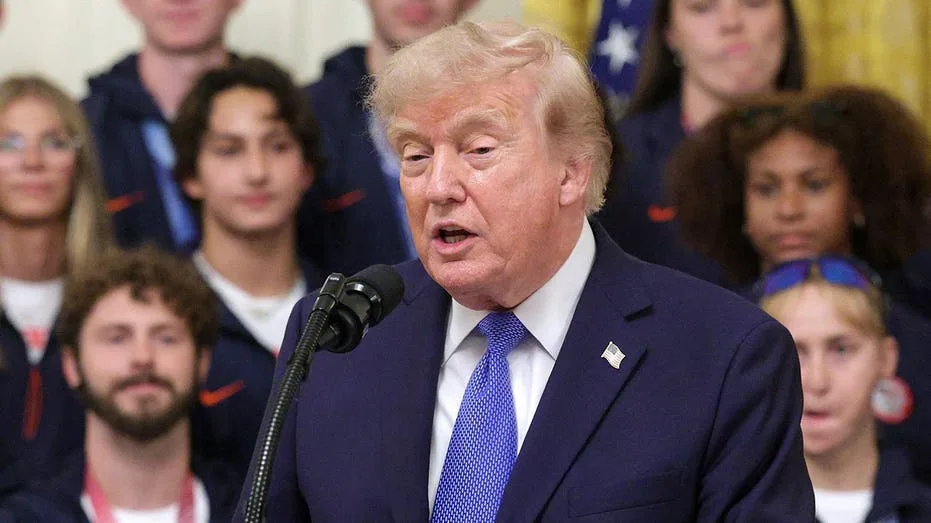
Trump hosted over 120 athletes, coaches, staff, and representatives from Team USA at the White House on Thursday evening to commemorate their achievements at the recent Milano Cortina Winter Olympic and Paralympic Games.
During the event, Trump asserted that the collegiate athletic system is "the engine of American Olympic dominance," highlighting that it contributed 88% of the Team USA representatives for those Games. He called upon both the House and Senate to pass the bill, emphasizing that he would sign it immediately upon it reaching his desk.
"I’m urging the House and the Senate to come together, bipartisan if possible and it looks like they have done, to send the bill to my desk and I will sign it. I think we have no choice," Trump stated. "We have to get that done. If we don’t, we’re very foolish. Nobody knows what will happen. We’re in Never-Never Land. We’re not going to let that be happening. We’re not going to let that happen to these great people and others."
Trump further stated that his administration is "doing everything we can to protect the cherished sporting traditions that have long been a part of our nation."
"Already we’ve done a lot to save women’s sports, and we’re also saving college sports. We’re in the process of working very hard," he added.
The Protect College Sports Act
The Protect College Sports Act, a bipartisan proposal actively championed by NCAA officials, aims to grant the collegiate governing body enhanced antitrust legal protections. It also seeks to establish a consistent national framework for various aspects of college athletics, including Name, Image, and Likeness (NIL) compensation, the transfer portal, and other related issues.
However, the bill has encountered legislative hurdles in the Senate. On Thursday, three Republican senators introduced an amendment designed to prevent the bill from overriding state statutes that prohibit biological men from participating in women’s sports. Senators Josh Hawley of Missouri, Jim Banks of Indiana, and Tommy Tuberville of Alabama are advocating for this modification, seeking to close what they perceive as a loophole that could undermine existing state laws intended to maintain separate athletic competitions for biological males and females.
The current text of the bill could potentially supersede certain state laws concerning college athlete eligibility. These senators believe that their respective state laws, along with similar legislation in other states, would be affected. Their proposed amendment aims to clarify that such state laws would remain enforceable if the federal bill is enacted.
"I’ve reviewed the current draft of the Senate NIL bill and I am very concerned it PREEMPTS Missouri’s law banning men in women’s sports," Senator Hawley posted on X. "This is what [Riley Gaines] has been saying. Big, big problem."
Urgency Before Recess
While the fate of the amendment remains uncertain and could significantly influence Republican support, Trump expressed hope that the bill will reach the Oval Office promptly. He believes it provides the necessary structure to safeguard college sports now and in the future. Earlier on Thursday, the Trump administration released a statement endorsing the act's passage, reinforcing the president’s wish to see a college sports bill passed.
The administration's policy statement outlined concerns that "The future of college sports, especially the future of Olympic and non-revenue sports, is threatened by significant legal and financial uncertainty. Federal legislative action is imperative to fix the statutory ambiguities, ensure liability protection and uniform standards, and stop the endless litigation that is fueling this crisis, which will in turn provide the stability, fairness, and balance necessary to protect student-athletes and preserve collegiate athletic opportunities."
A looming congressional recess adds pressure to the legislative timeline. The Senate is scheduled to begin its five-week recess at the close of business on Friday. However, a substantial legislative agenda, beyond just this bill, could potentially delay their departure from Capitol Hill.
Whether the Senate will address and pass the Protect College Sports Act before the recess is yet to be determined, but Trump’s remarks on Thursday night served as a clear push for its swift advancement to the House and subsequently, to his desk.