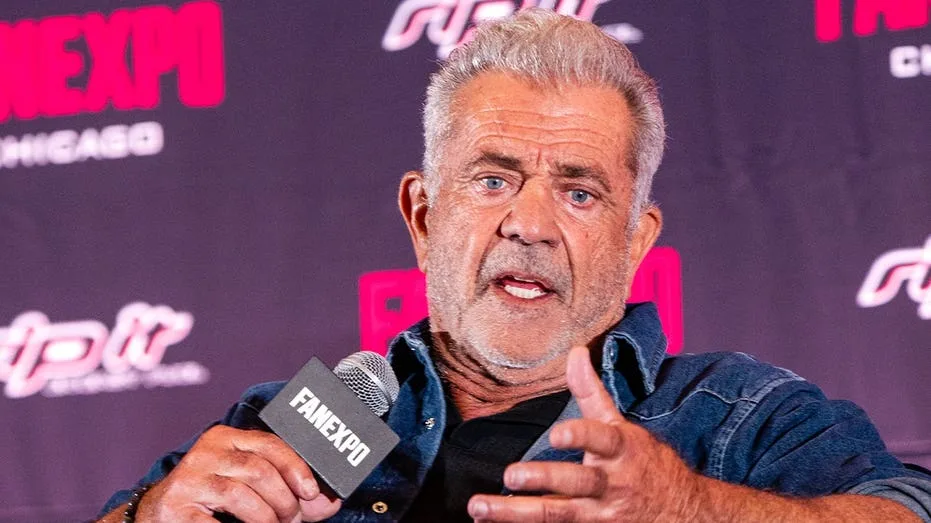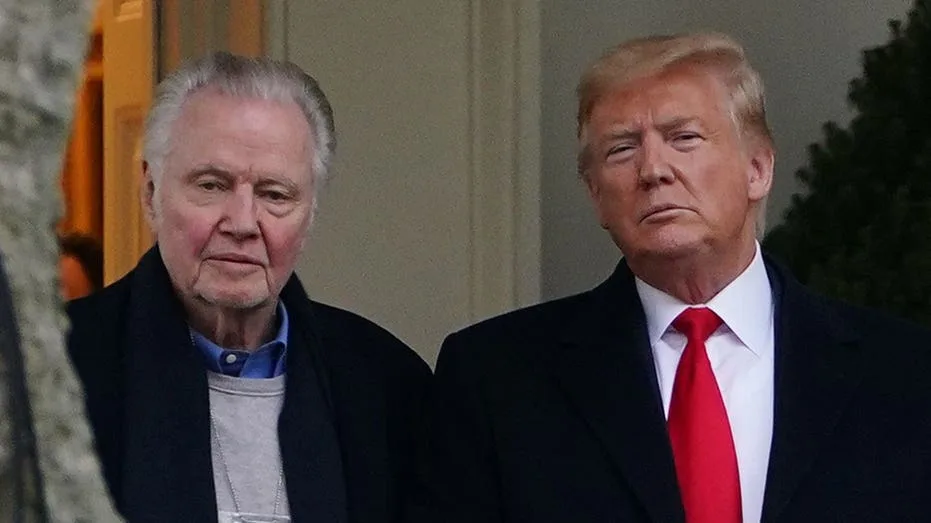
Former President Donald Trump has sharply criticized the state of the Hollywood film and television industry, labeling it a "Complete and Total Disaster." His remarks came after a "great and very interesting meeting" with actor Jon Voight, whom Trump appointed as a special envoy in 2025 alongside Mel Gibson and Sylvester Stallone.
Trump conveyed his perspective on his Truth Social platform, noting Voight's deep concern for the industry. "He is a fantastic man who loves our Country, and feels strongly about the Motion Picture and Television Industry," Trump wrote. He added that Voight "hates what’s happened to it! It is being dissipated in its entirety. It has moved to Canada, and other Countries, with very little work being done anymore in the United States."
Trump further elaborated on his view, stating, "Hollywood is a Complete and Total Disaster! Despite the name, it is getting very little work. There is no incentive to be there, and it is hurting California very badly."
Proposal for Federal Tax Incentives
According to Trump, Voight and other industry leaders suggested a federal tax incentive program. The aim, as Trump described it, is to "Make our Movie and Television Production Business GREAT AGAIN, perhaps GREATER THAN EVER BEFORE!"
Trump argued that the financial outlay for such tax incentives would be recouped significantly. "The amount of money spent on Tax Incentives will be made up tenfold by the money pouring into the Treasury’s coffers," he asserted. He indicated that discussions were being arranged with leaders from both political parties to advance this initiative, emphasizing its potential bipartisan appeal, especially given the economic impact on California and other states often considered politically aligned with Democrats.
"I am going to suggest that Republicans and Democrats get together, and immediately craft Legislation to save the Movie, Television, and Entertainment Business in America. Congress should approve, immediately, a Federal Production Incentive to create Entertainment Jobs in America," Trump urged. He concluded by stressing the efficiency and broad national benefit of such a measure: "It can be done quickly, accurately, efficiently and, importantly, will benefit ALL of America. What we watch on the Silver Screen should be made in what was once the Movie and Motion Picture Capital of the World. Let’s get this done!"
Industry Response and Background
Charles Rivkin, Chairman and CEO of the Motion Picture Association, welcomed the proposed action. Rivkin stated, "We applaud President Trump’s support for this vital action, and we look forward to continuing to work with the White House and bipartisan leaders in Congress to enact a meaningful and effective national incentive into law."
The concept of special envoys for Hollywood was first introduced by Trump shortly before his second Inauguration Day. At that time, he announced Jon Voight, Mel Gibson, and Sylvester Stallone as "Special Ambassadors to a great but very troubled place, Hollywood, California." He explained their role as "Special Envoys to me for the purpose of bringing Hollywood, which has lost much business over the last four years to Foreign Countries, BACK—BIGGER, BETTER, AND STRONGER THAN EVER BEFORE!" Trump expressed his intent to act on their recommendations, envisioning a "Golden Age of Hollywood" mirroring the United States itself.
Comprehensive Plan Submitted
In May 2025, Jon Voight, working with special advisor Steven Paul, presented a detailed "comprehensive plan" to the president aimed at revitalizing the film and television sector. According to a statement, Voight and Paul engaged with "dozens of leading film and television organizations (guilds, unions, studios and streamers) about what changes need to be made to increase domestic film production."
The in-person meeting with Trump took place at his Mar-a-Lago residence in Florida and included Scott Karol, President of SP Media Group/Atlas Comics. The submitted proposal encompasses various measures: "federal tax incentives, significant changes to several tax codes, the establishment of co-production treaties with foreign countries, and infrastructure subsidies for theater owners, film and television production companies, and post-production companies." Additionally, the plan emphasizes "job training, and tariffs in certain limited circumstances."
Voight's statement highlighted the core objective: "This plan is about leveling the playing field so that producing right here in America is not only a competitive option, but the first choice." The White House and its policy advisors are currently reviewing the proposal.