The Major League Baseball trade deadline has concluded, marking a period of intense activity where numerous notable players were moved as franchises strategically positioned themselves for the remainder of the season, whether for a postseason push or a future-oriented rebuild.
The Blockbuster Skubal Acquisition
The most impactful transaction occurred just days before the deadline, when the Los Angeles Dodgers secured two-time reigning Cy Young Award winner Tarik Skubal from the Detroit Tigers. This high-profile acquisition immediately drew considerable reaction from fans of rival clubs. Despite the Dodgers committing two highly-regarded prospects for what amounts to nine to ten starts from Skubal during the remaining regular season, the move underscored their ambition.
Key Player Movements
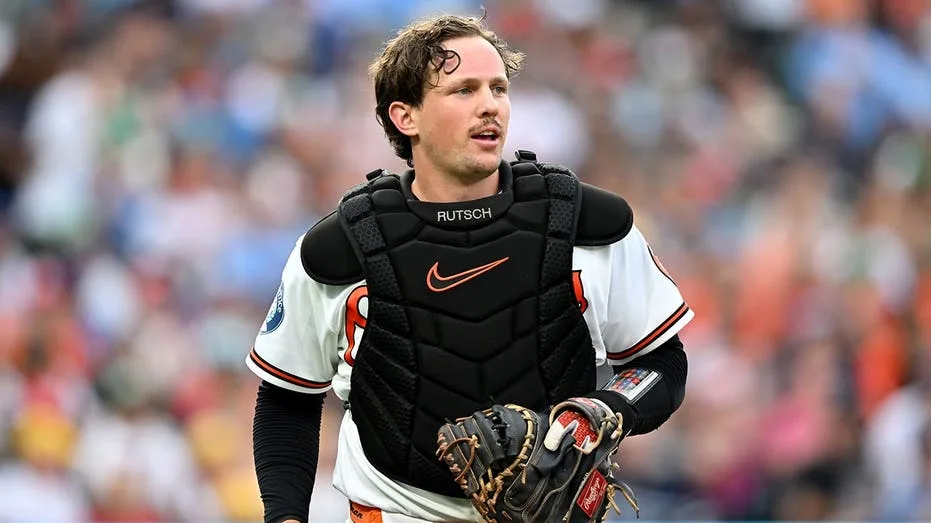
Several other significant players and prospects were involved in trades, with one of the day's most unexpected deals involving former first overall draft pick, Adley Rutschman.
Rutschman, once heralded as one of baseball's premier prospects, largely fulfilled expectations during his initial seasons in the major leagues. In 2022 and 2023, he accumulated an impressive 11.1 wins above replacement, hitting 33 home runs with a .268/.369/.439 slash line. His plate discipline was notable, featuring a 13.6% walk rate against a mere 16.2% strikeout rate. Alongside Gunnar Henderson and Jackson Holliday, Rutschman was considered a cornerstone of the Orioles' promising young core.
However, his 2024 performance was somewhat subdued, and he has contended with injuries over the past two seasons, participating in a combined 157 games. Despite these challenges, his 2026 season has shown a return to form, with positive defensive contributions and offensive statistics aligning more closely with his career averages. The Baltimore Orioles, trailing by 11.5 games in the American League East and seemingly ceding ground in the Wild Card race, capitalized on his market value.
Rutschman was sent to the Boston Red Sox in exchange for Anthony Eyanson, Kyson Witherspoon, Carlos Narvaez, Enddy Azocar, and a player to be named later. This represented a substantial return for Baltimore, with Eyanson ranked as the 27th best prospect in baseball by Fangraphs, and Witherspoon having been the Red Sox' first-round selection just a year prior. For Boston, Rutschman addresses their catching needs for the remainder of this season and all of 2027 before he reaches free agency, providing a significant boost as they pursue a surprising playoff berth.
In another notable exchange involving the Boston Red Sox, the team traded former top prospect Marcelo Mayer to the San Francisco Giants in return for reliever Erik Miller. Mayer, once seen as a crucial part of Boston's future, had not performed up to expectations in limited major league opportunities over the past two years.
One of the more significant transactions leading up to the deadline saw the New York Mets deal Freddy Peralta to the Tampa Bay Rays for Aidan Smith, Gary Gill Hill, and Emilien Pitre. This return was perceived as uninspiring, especially considering the Mets had previously surrendered several top prospects to acquire Peralta during the offseason. Peralta arrived in New York from Milwaukee as one of baseball's elite starters, highlighted by a career-best 2.70 ERA in 2025. However, his 2026 season saw a dramatic decline, with his strikeout rate falling from 10.39 per nine innings to 8.95 per nine, and his ERA escalating to 4.99. For Tampa, an organization renowned for its ability to develop and improve players, Peralta brings a proven postseason background and a strong career track record. If the Rays can help him revert to his career norms, he would be a substantial asset for a team already leading the AL East.
Other impactful deals included Kevin Gausman, a key starting pitcher during Toronto's World Series run, moving to the Chicago Cubs. The Cubs, facing a desperate need for rotation reinforcement following a season-ending injury to Cade Horton, also acquired Clay Holmes from the Mets. In exchange for Holmes, the Mets received Jefferson Rojas, Chicago's second-ranked prospect.
The New York Yankees, after securing Luis Garcia Jr. from the Washington Nationals, further enhanced their offensive lineup by adding Heliot Ramos from the San Francisco Giants, addressing the absence of Aaron Judge.
The San Diego Padres, known for their aggressive approach under General Manager AJ Preller, once again made bold moves at the deadline. Seeking pitching upgrades, Preller first acquired Robbie Ray from the Giants, then followed up by adding Casey Mize, a former number one overall draft pick, from the Detroit Tigers. Both pitchers immediately bolster the team's rotation, providing an upgrade over existing options such as Randy Vasquez, Kyle Hart, JP Sears, or Walker Buehler. As part of these deals, the Padres' second-ranked prospect was sent to Detroit, reflecting Preller's consistent strategy.
Similarly aggressive, the Los Angeles Angels traded former top overall prospect Jo Adell to the Cleveland Guardians and starting pitcher Jose Soriano to the Toronto Blue Jays. Adell, while consistently demonstrating power, never fully developed the plate discipline required to maximize his offensive potential. Soriano, who remains under team control through the 2028 season, brought back Toronto's top prospect, Arjun Nimmala. Crucially, these trades signaled a shift in Anaheim's organizational philosophy: rather than retaining players on a struggling team, the Angels are now prioritizing maximizing asset value as they embark on a rebuilding phase.
Luis Arraez also joined the Philadelphia Phillies, providing an offensive boost for a team that has surprisingly struggled to generate runs despite a lineup featuring stars like Kyle Schwarber, Bryce Harper, and Trea Turner.
Strategic Shifts and Playoff Implications
While Skubal's acquisition represented the most prominent individual move, the deadline saw a high volume of interesting trades designed to incrementally improve teams. Several top and former top prospects were exchanged, and clubs like the Padres and Cubs made significant upgrades to their rosters as they push for postseason berths. The deadline may have been light on superstar-level transfers beyond Skubal, but it was rich in strategic depth and overall transaction volume. The Dodgers, often a dominant force, were widely seen as having navigated the deadline most effectively.
Notably, a number of teams opted to sell assets despite being only a few games out of Wild Card contention, indicating a focus on future planning over immediate playoff pursuit. The Baltimore Orioles, for instance, were 2.5 games shy of the third Wild Card spot but traded both Taylor Ward and Adley Rutschman. The Miami Marlins, with a 58-55 record and just 1.5 games out of a Wild Card spot, dealt catcher Liam Hicks and starter Braxton Garrett, though they did acquire reliever Victor Vodnik from the Colorado Rockies. The Seattle Mariners, three games back in their division and two in the Wild Card race, traded Luis Castillo. Even the Detroit Tigers, within a few games of a playoff position, chose to sell.